24/7 Emergency Line Open
Tankless Water Heater Installation in Rio Verde, AZ
A tankless heater swaps a large tank for a compact wall unit that heats water as it flows. That sounds simple, and the unit is, but the house around it has to cooperate. The gas line, the vent and the electrical supply decide whether the swap is easy or a project, and a plumber serving your area checks those first.
Call (480) 806-2944 All plumbing services
- Licensed and insured plumbers
- Same-day service when available
- 24/7 emergency dispatch
Tank or tankless: what changes in the house
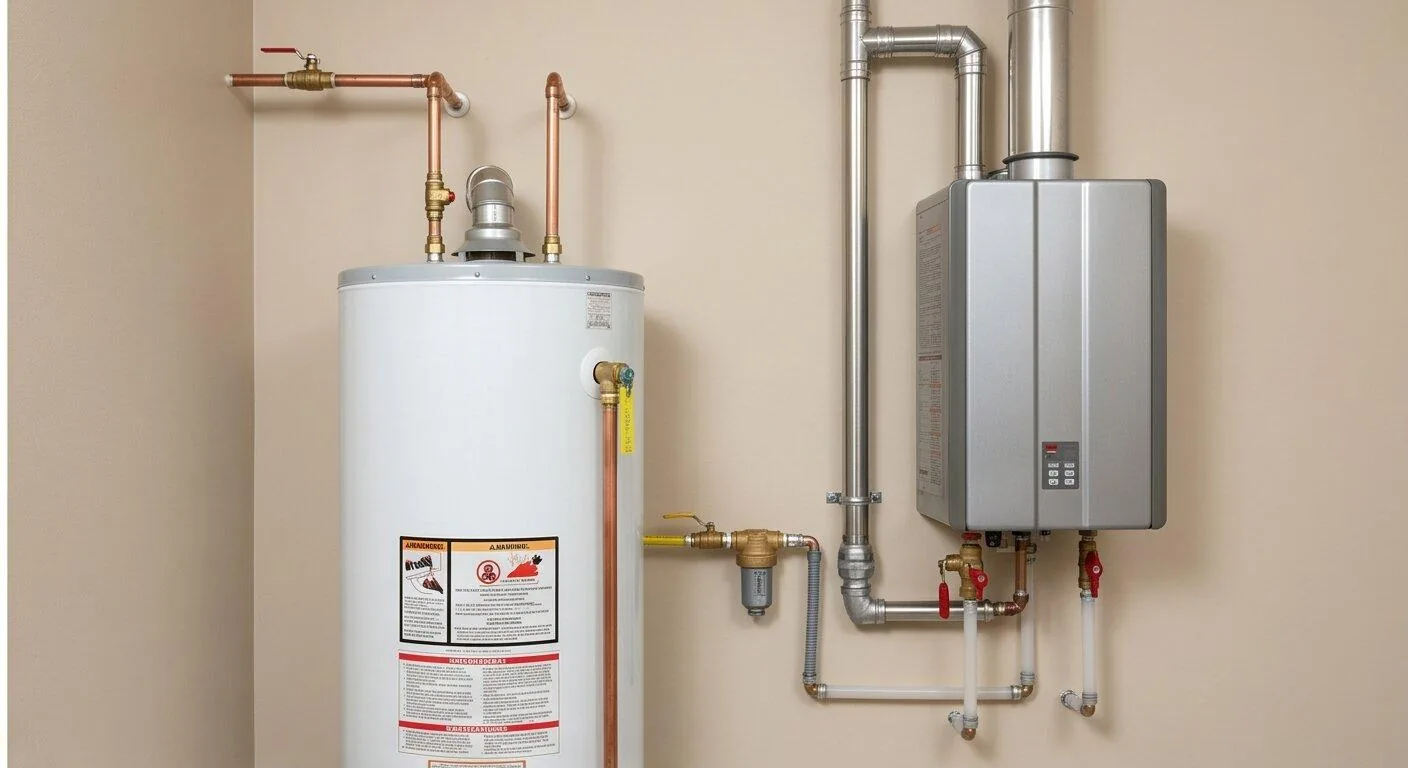
A tank stores hot water and loses a little heat while it waits. A tankless unit stores almost none and fires up when a tap opens. The practical difference is that a tank runs out after a long draw while a tankless unit keeps going but caps how much it can heat at one time.
| Feature | Tank heater | Tankless heater |
|---|---|---|
| Hot water supply | Limited by tank size and recovery | Continuous, limited by flow rate |
| Space needed | A floor footprint of a few square feet | A wall mount, smaller footprint |
| Gas line needs | Usually the existing line | Often a larger line |
| Venting | Standard flue | Specific sealed or stainless vent |
| Hard water effect | Sediment in the tank | Scale in the heat exchanger |
| Typical swap | Like for like, simple | A project with line and vent changes |
If you only need to replace a failed tank and keep things simple, the tank replacement page covers that route. Tankless suits households that value space, want hot water on a long draw and are ready for the extra work.
Sizing: flow rate, not gallons
Tankless units are rated by how many gallons per minute they heat to a given temperature rise, so the sizing question changes from capacity to demand. Add up the fixtures that could run together, such as two showers and a kitchen tap, and match the unit to that peak.
- List the fixtures that could run at the same time
- Note the temperature rise needed, which depends on incoming water temperature
- Choose a unit whose flow rating covers the peak with some margin
- Consider two smaller units for a large home with distant bathrooms
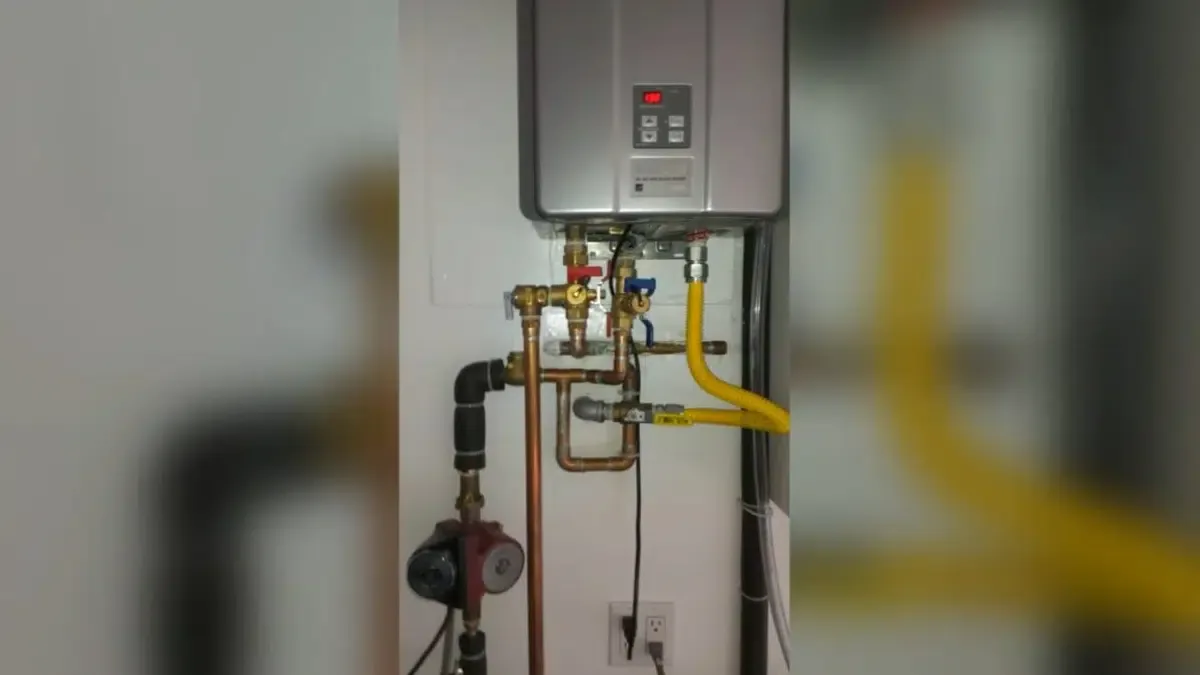
Long pipe runs matter as well. Water waits in the pipe between the heater and a far bathroom, so a recirculation line or a small point of use unit can help a distant shower.
Thinking about going tankless? Talk it through first.
One conversation sorts out whether the gas line and vent will cooperate.
Call (480) 806-2944Gas line, venting and power
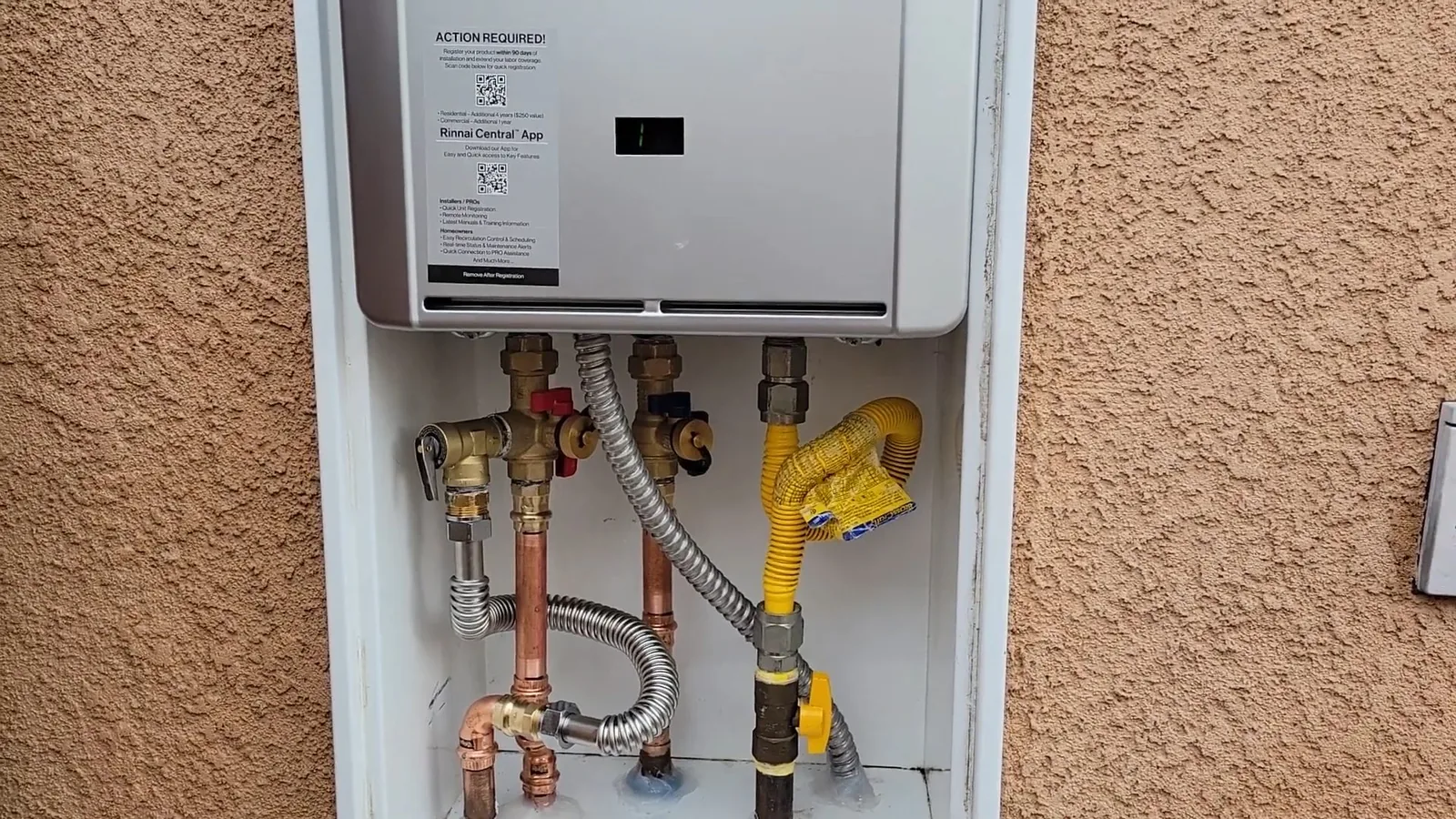
Most of the extra work lives here. A gas tankless unit pulls a large volume of gas when it fires, so the supply pipe has to be sized for it. The vent is usually a dedicated run rather than the flue a tank used, and some units need an electrical outlet nearby for the controls.
Find out if the house runs on natural gas or propane, because the unit and its orifice must match. Moving the heater to a new wall or running a new line can change the permit picture, and the work is done to the manufacturer instructions and the code in force.
- Identify the fuel and the existing pipe size and length.
- Calculate the load the new unit will need.
- Upgrade the gas line or wiring if the load requires it.
- Run the vent and condensate drain where the unit specifies.
- Commission the unit, test it and set the temperature.
A gas smell is an emergency. Leave the building, do not touch switches, and call from a safe distance.
Permits: where the county stops being simple
Maricopa County says a like-for-like water heater replacement by a licensed contractor does not need a permit when it follows the manufacturer specifications. A conversion from a tank to tankless is not like for like, and the county draft addenda text treats on-demand units differently, so expect the plumber to confirm the permit requirement for your address.
Source: County permit information on like-for-like heater swaps (accessed 2026-11-06).
Scale, descaling and the local water
Tankless units rely on a narrow heat exchanger, and mineral scale narrows it further. Reported hardness for the Rio Verde supply is 11 grains per gallon in EPCOR's 2022 figures, which counts as hard, so scale is a real planning point for a home on that supply.
Source: EPCOR 2022 consumer confidence report (accessed 2026-11-06).
Descaling means circulating a mild acid solution through the heat exchanger on a schedule, and many units have service ports for it. Treating the water with a water softener reduces how often it is needed. A house on a private well or hauled water draws something else, so test it before relying on the EPCOR figure.
Servicing and troubleshooting a tankless unit
Error codes, lukewarm output and cold sandwich effects, where hot water briefly turns cold between two uses, are the common complaints. They usually trace to scale, a clogged inlet screen, a vent problem or a flow rate that is too low for the unit to fire.
Flushing and cleaning the inlet filter restores many units. If the heater still misbehaves, a plumber reads the code, checks the gas pressure and tests the sensors. A unit that is repeatedly failing may need water heater fix or a closer look at the install.
Tankless questions answered
Does a tankless heater really give endless hot water?
It heats water as it flows, so it does not run out the way a tank does. It does have a limit on how much water it can heat at once, measured as a flow rate. If several showers and a dishwasher run together, the unit can fall behind, which is why sizing matters.
Why does a tankless install cost more than a tank swap?
The heater itself is only part of it. Gas units often need a larger gas line and new venting, electric units may need heavy wiring and breaker capacity, and the old connections usually change. A plumber explains those pieces before you commit, and the cost page covers how estimates are built.
Will my current gas line work?
Not always. A tankless unit draws a large burst of gas when it fires, and a line sized for a tank can be too small. A plumber checks the pipe diameter and length, and the line may need upgrading before the new heater is connected.
Does hard water hurt a tankless heater?
Yes, scale builds inside the heat exchanger and cuts flow and efficiency. Descaling the unit on a schedule and treating the water both help. Hardness in the local EPCOR water is listed in its 2022 report, so a softener is worth discussing.
Is a tankless heater a good fit for a small household?
It can be. A small household with modest overlapping use may never push a tankless unit to its limit, and the space saved is real. A plumber looks at your fixtures and daily use before recommending it over a tank.
Want a tankless estimate that accounts for the gas line?
Begin with the fuel, the heater location and how much hot water you use.
Call (480) 806-2944Ready to talk tankless in Rio Verde? Call now.
Share your fuel, the heater location and how many bathrooms you have, and the first visit can focus on the gas line and vent.
- Licensed and insured plumbers
- Same-day service when available
- 24/7 emergency dispatch